
Article: Walnut shell scrub: what it does, and why it has a reputation
Walnut shell scrub: what it does, and why it has a reputation
Walnut shell is one of the best natural exfoliants there is, and it's in every LIEVE scrub for reasons that have nothing to do with tradition.
Start with the practical problem every body scrub has to solve. You're in a hot shower. Whatever is doing the scrubbing needs to survive contact with water long enough to actually work.
Sugar dissolves. Within about twenty seconds of hitting warm water it's gone, and the back half of your shower is just oil. Salt lasts longer but stings — anywhere you've shaved, any small nick, any patch of irritated skin, you'll know about it. Coffee grounds work but they stain grout, clog drains, and smell like breakfast whether or not you wanted that.
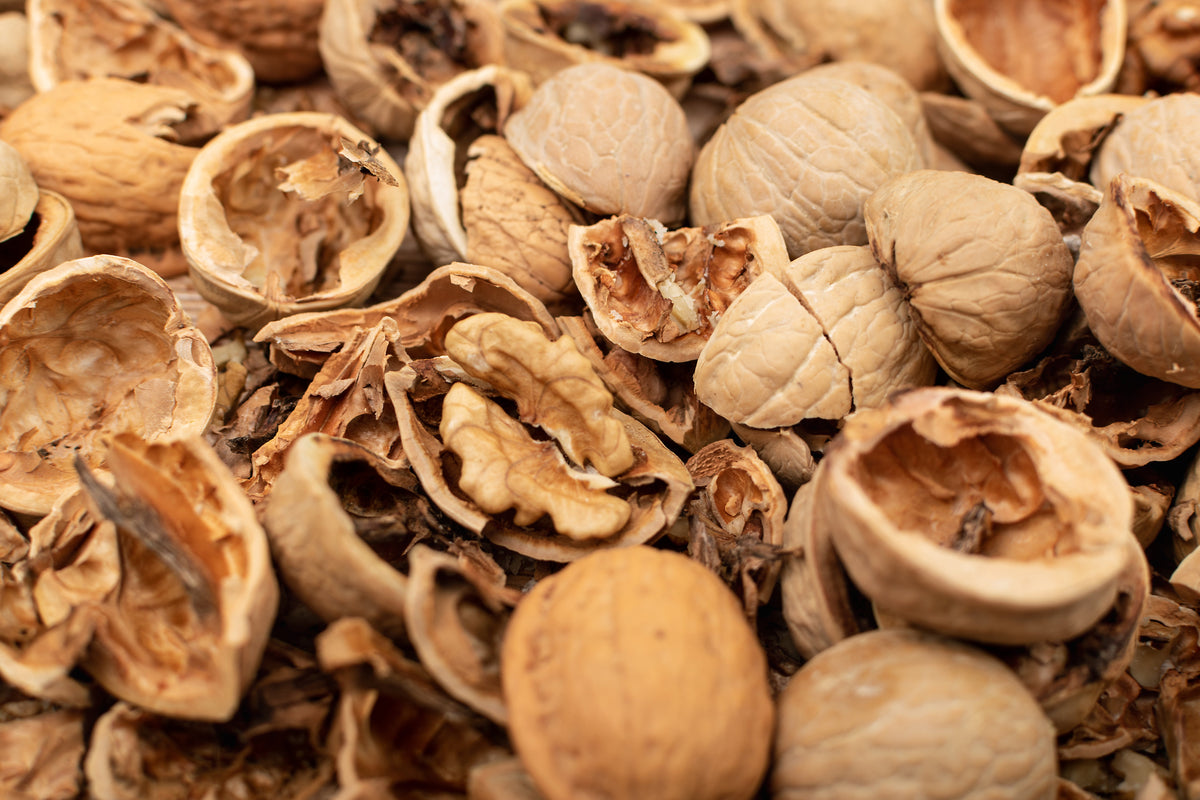
Walnut shell does none of those things. It's hard enough to hold its shape for the whole wash, it doesn't sting broken skin, and it rinses clean. It's also a byproduct — the shells are what's left after the walnut industry takes the nut, so nothing is grown to make it.
And it can be milled to a precise, consistent size, which matters more than anything else here and is where the rest of this story lives.
So why the bad reputation?
One lawsuit. In 2016 a class action was filed against Unilever over St. Ives Apricot Scrub, claiming walnut shell caused microtears in skin. It got an enormous amount of press, and it's the origin of nearly everything written on the subject since.
A US District Court dismissed it in December 2018. The study behind the microtear claim had fourteen participants over two weeks, and the court found no evidence the tears were actually a safety hazard.
Hardly anyone covered the dismissal, so the original story is the one that stuck.
The thing that actually matters is milling
None of that means every walnut scrub is fine, and we're not going to pretend it does.
The legitimate concern isn't walnut — it's particle size and edge shape. Coarsely ground shell with jagged edges is genuinely rough on skin. Mill the same shell finely and you end up with something that behaves nothing like it.
There's a spec for it. Cosmetic-grade walnut shell runs between 100 and 1000 microns, with body formulas sitting around 400 and face products milled finer. Go below that and the particles stop exfoliating at all. Go above it and you get the sandpaper people describe.
It's a boring detail, which is probably why it never made it into the coverage.
Face is not body
Here's the part almost nobody separates out. Every source in this controversy — the lawsuit, the coverage, the dermatologist quotes — concerns facial scrubs. St. Ives Apricot Scrub is a face product.
Facial skin is roughly a third as thick as the skin on your legs, thinner again around the eyes, and far more reactive. Your shins are not your cheekbones.
The American Academy of Dermatology's position is to match the method to the skin rather than write off a category. Their cautions are worth taking seriously: if your skin is dry, sensitive or acne-prone, physical exfoliation may not suit you, and on deeper skin tones aggressive scrubbing carries a risk of post-inflammatory pigmentation. Go gently, and not very often.
One more thing, said plainly
Walnut is a tree nut. Around 1% of people are allergic to it, and people with pollen allergies sometimes cross-react. Our scrubs also contain sweet almond and apricot. If you have a nut allergy these are not for you, and fine milling doesn't change that. Patch test regardless.
How we use it
All four LIEVE scrubs use finely milled walnut shell suspended in rice bran oil, shea butter and jojoba, so the grains are cushioned rather than dragged over dry skin. Body only — we don't make a face scrub and wouldn't suggest using these as one.
Worth knowing: the EU banned plastic microbeads in cosmetics in October 2023. The ingredients that replaced them are the natural ones — walnut shell among them.
This piece is about the exfoliant itself. For the broader question of what a body scrub actually does, and what it won't, we've answered that separately.